The world is changing, and it is changing very quickly. The promise of expanded computational power brings with it as many potential applications for efficiency as it does risks and challenges. But what does the world of tomorrow look like for regulators? How will the agencies of the future be empowered by new technology to improve their daily work? And how is the landscape of regulation at large shaping up as governments prepare to face tomorrow’s challenges?
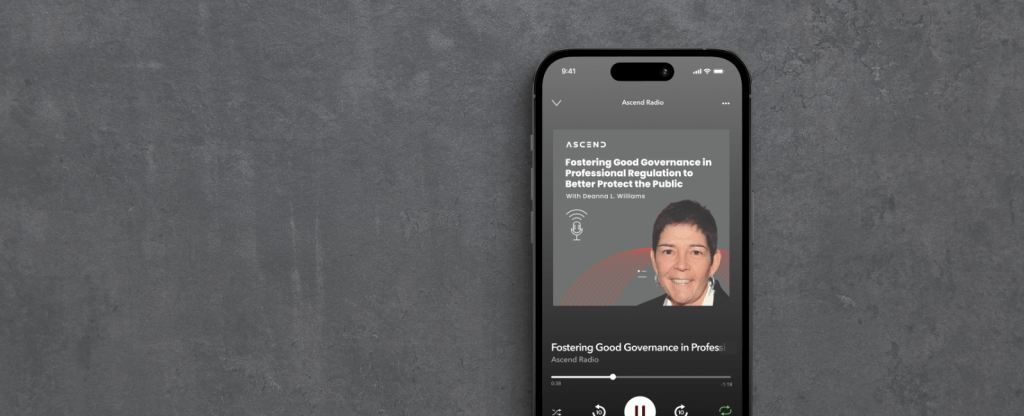
Over the past year, several guests from the Ascend Radio podcast have brought unique perspectives on the future of regulation to the table, highlighting exciting opportunities as well as potential concerns for how agencies will operate in the years and decades to come. Here, we will explore some insights from our guests, searching for common threads in their observations and summarizing key themes that seem to arise when considering the regulator of the future.
The rise of artificial intelligence
The rapid advancement and proliferation of AI technology has, of course, been top of mind for regulators in recent years. Though there exists much debate over how AI should be regulated as its influence grows, many regulators are also exploring how the technology can be used to better facilitate their day-to-day work and help to ensure more efficient public protection overall.
David Benton of the National Council of State Boards of Nursing (NCSBN), who recently appeared on Ascend Radio to discuss his impending retirement and the future of nurse regulation, expressed an optimistic view of the potential for harnessing AI to improve the work of regulation in several different areas of focus.
Complaint handling and continuing education
Benton noted that AI was already being tested in some agencies in triaging complaints. The process of identifying the nature of complaints and determining whether they fall within the scope of the regulator has historically been handled by regulatory staff. By automating this process and using AI to parse the data instead, Benton said, regulators could create a much more responsive way of dealing with complaints than is currently available.
Another regulatory area in which Benton pointed out potential AI applications was continuing professional development (CPD). The Nursing and Midwifery Council of the U.K., for example, routinely takes random samples of submitted evidence that nurses have completed sufficient CPD hours to see whether these hours are relevant to the individual’s job role. According to Benton, AI could be used to analyze this evidence and ensure the relevance of such continuing professional development programs.
Algorithms can also analyze existing data to identify how patient needs are changing and help regulators better understand which continuing education approaches are best in preparing staff for the future of their professions. More immediately, regulators can use AI in the context of continuing education to help provide professionals with automated assessments and personalized tutoring in virtual environments. Benton noted there are already systems that have begun enabling this type of work.
Denis Murphy, Chief Administrative Officer at the Association for Dental Education in Europe (ADEE) and council member at Ireland’s health regulator, CORU, took a slightly more cautious view of AI’s impact on the future of professional regulation in his recent Ascend Radio appearance.
According to Murphy, academics in professional communities around the world have expressed worry about how regulators can ensure academic integrity when AI tools can be so easily leveraged to complete coursework. If institutions and regulators cannot ensure academic integrity, he said there is no guarantee they could ensure the competence of the practitioners they regulate, which could call into question the value of professional regulation overall.
Remote work and information sharing
Despite this, Murphy said the worldwide embrace of new technology to enable the work of regulation since the onset of COVID-19 shows great promise for the future. For example, COVID taught many agencies that board business can be conducted remotely, and many have chosen to continue under remote work arrangements because of their benefits in terms of scheduling and travel.
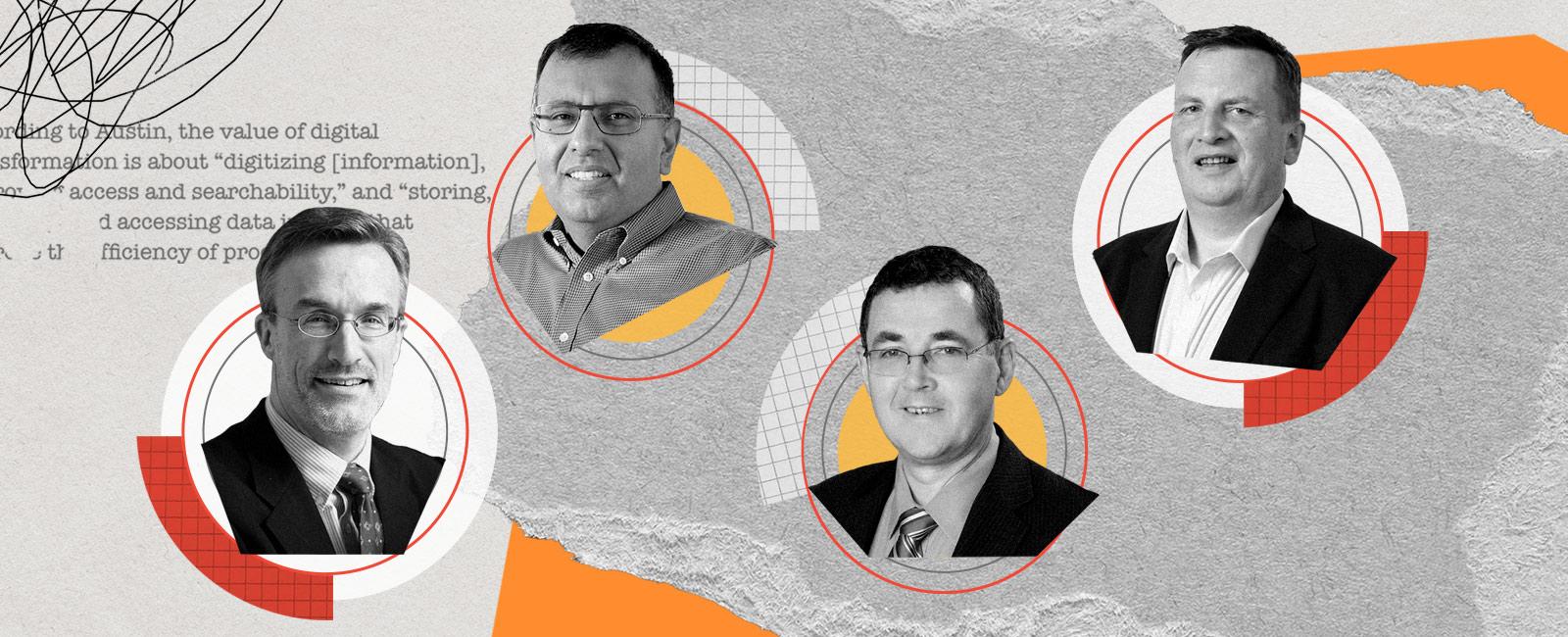
Zubin Austin, Murray Koffler Research Chair at the Leslie Dan Faculty of Pharmacy at the University of Toronto (U of T), expressed similar sentiments about the advancement of public sector technology (not necessarily AI) in his appearance on Ascend Radio this summer. According to Austin, the value of digital transformation is about “digitizing [information], improving access and searchability,” and “storing, managing, and accessing data in ways that improve the efficiency of processes.”
Specifically, one strength of tomorrow’s regulator will come from widespread information sharing between agencies across different jurisdictions and practice areas. It is now more difficult, for example, for professionals who have faced disciplinary action to simply move jurisdictions and apply under new regulators to continue practicing without restrictions, and this is thanks to the transparency and ease of access to information across all jurisdictions that technology has permitted.
Challenges of the future – climate, consolidation, crypto
While the regulator of tomorrow will surely be empowered by advancements in technology, the future also presents its fair share of challenges, including particularly urgent, critical ones like climate change. Cary Coglianese, Director of the Penn Program on Regulation (PPR), said in his Ascend Radio appearance that regulation must play a central role in the fight against climate change, which is a “classic market failure.”
However, regulation does not operate in a vacuum. For climate regulation to work effectively, it must be accompanied by a political and sociocultural push for eco-friendly practices. Regulators need authority to impose regulations, Coglianese said, and this authority in democratic systems comes from elected officials who are affected by those who benefit from the status quo. From this perspective, addressing climate change will require a normative change in which environmentally destructive activities are viewed by the voting public as morally reprehensible.
It follows, logically, that elected officials will come to represent the newer social mores of their constituents, and with this shift in the cultural perspective on climate change, regulators should be more empowered to place substantive restrictions on greenhouse gas emissions. Such solutions will be costly, Coglianese said, but under the system as it stands, the entities which contribute the most to pollution do not bear the cost of it.
Can regulation continue to grow?
According to Denis Murphy, government agencies face a growing demand for consolidation rather than regulatory expansion. Murphy cites calls from the World Health Organization (WHO) for health care regulators to integrate different fields like care provision and professional education as an example of this phenomenon.
Regulation can be an expensive commodity for the state and/or the regulated professions; one way or the other, somebody pays for it. Murphy said tomorrow’s regulator will have to pay increased attention to making sure their work returns a value on investment. Agencies will continue to face troubles trying to manage tighter budgets, and they may need to refocus activities, combine activities, and even pool resources with other regulators in order to do their work more efficiently.
These are not the only areas in which regulators will face unprecedented challenges in the years to come. Sean Gellis, in his Ascend Radio appearance, pointed out the increasing prevalence of cryptocurrency and the ongoing debate over whether to regulate crypto coins as securities or commodities as an example of where agencies will need to develop their understanding of new technologies. Crypto is not going away, and regulators must learn how it works if they want to keep up.
But by keeping up the important work of horizon scanning – remaining up to date on technological and sociocultural trends in both the private and public sectors – regulators will be better able to take on these challenges. And by using new tech to support their daily work, automating certain processes and freeing staff to work on tasks which require human judgment, tomorrow’s agencies will be much more equipped to handle tomorrow’s problems.